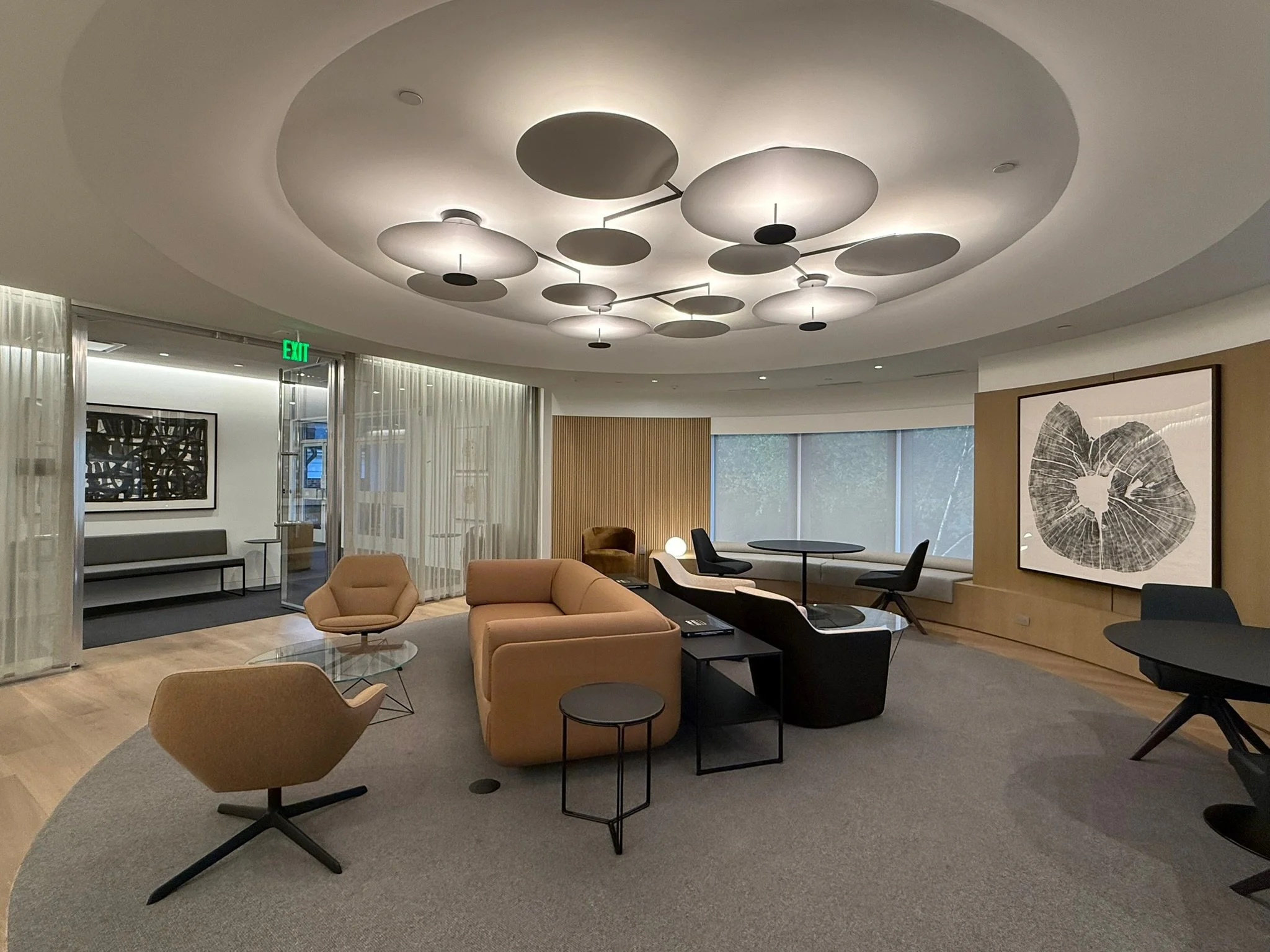
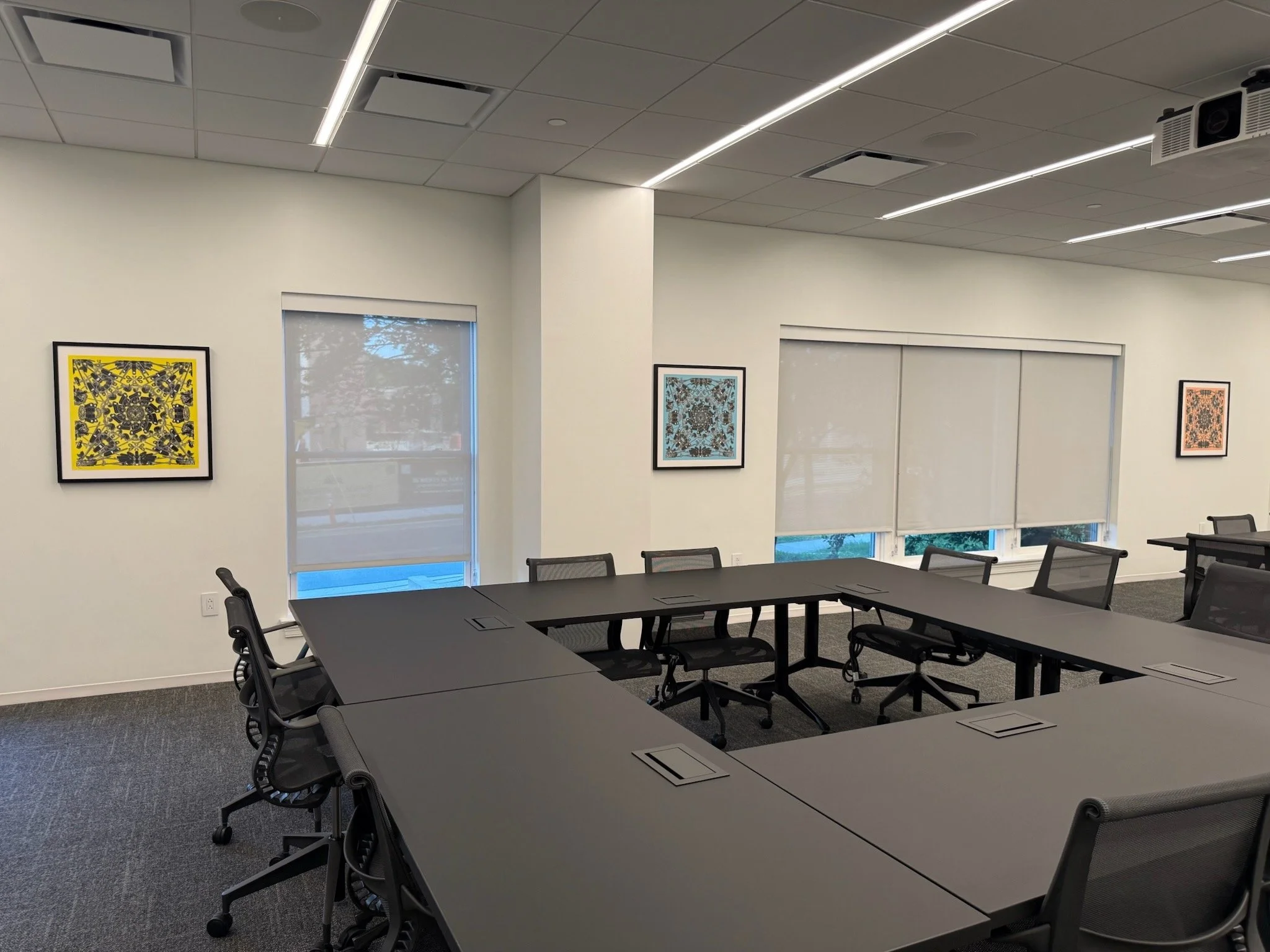
The John Seigenthaler Center was created by and named after a Vanderbilt professor and journalist whose vision was to promote appreciation for and understanding of the values that are vital to a democratic society.
The building is now home to the Board of Trust offices, and will continue to serve to advance free and open dialogue through diverse programming, thoughtful research, and engaging events in the newly renovated classrooms, meeting spaces, and auditorium.
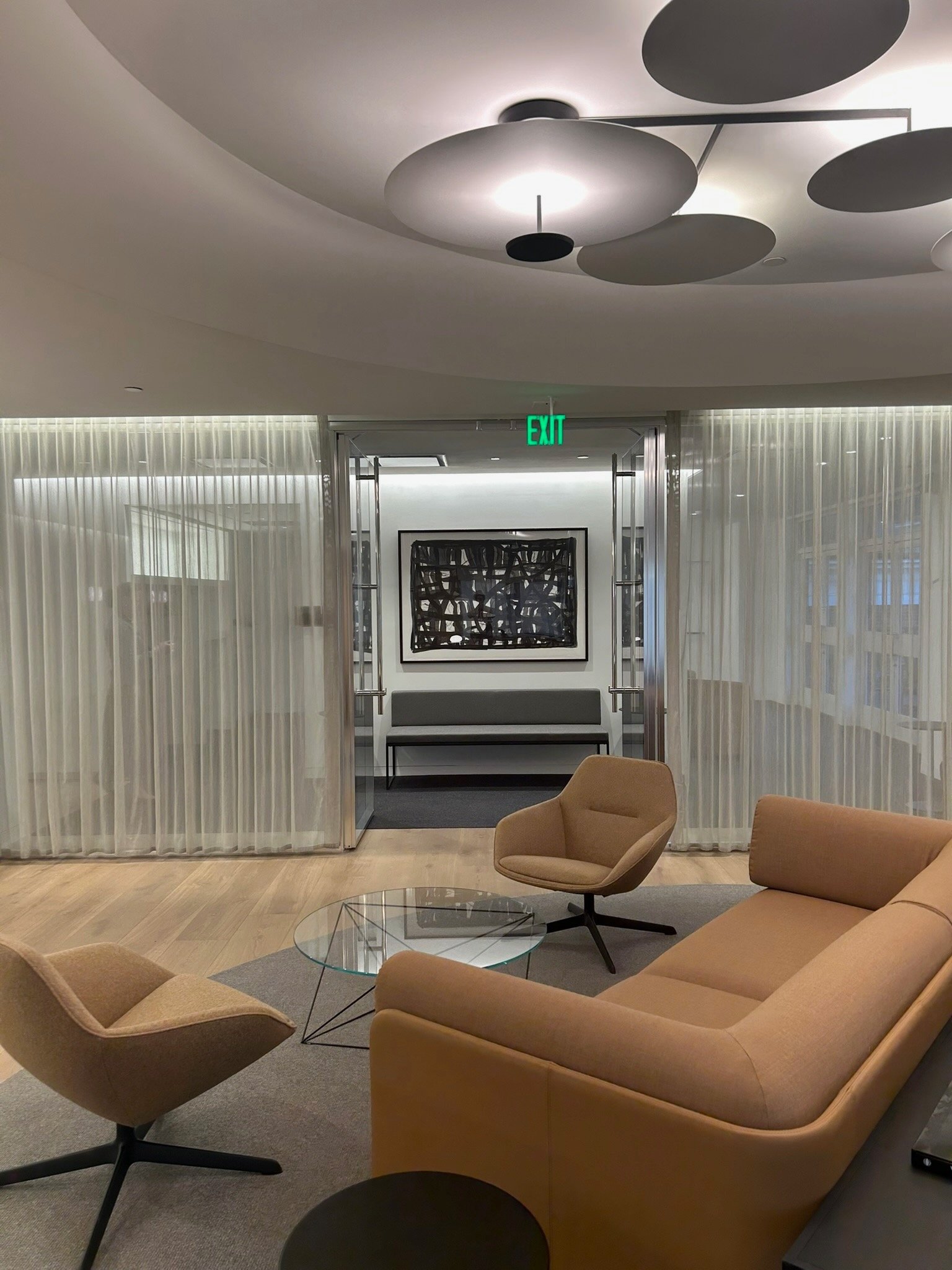
Interior renovation by MAS Studio
Stanley Whitney (American, b. 1946)
Untitled, 2024
Lithograph in 3 colors
42 1/2 x 61 3/4 inches
Edition of 28
Stanley Whitney graduated with an MFA from Yale School of Art in 1972, but found himself at odds with the politically and theoretically oriented contemporary art scene of the 1970s and 1980s, confronting the expectation that an African American artist should contend directly with themes of racial and cultural identity. Whitney was more interested in honing an abstract visual language.
He is known for his vibrant abstract paintings that unlock the linear structure of the grid, imbuing it with new and unexpected cadences of color, rhythm, and space. Deriving inspiration from sources as diverse as Piet Mondrian, Giorgio Morandi, and American quilt-making, Whitney composes with blocks and bars that articulate a chromatic call-and-response in each canvas. Experimental jazz—Charlie Parker, Miles Davis, Ornette Coleman—is Whitney’s soundtrack, its defining improvisational method yielding ever new energies to his process of painting.
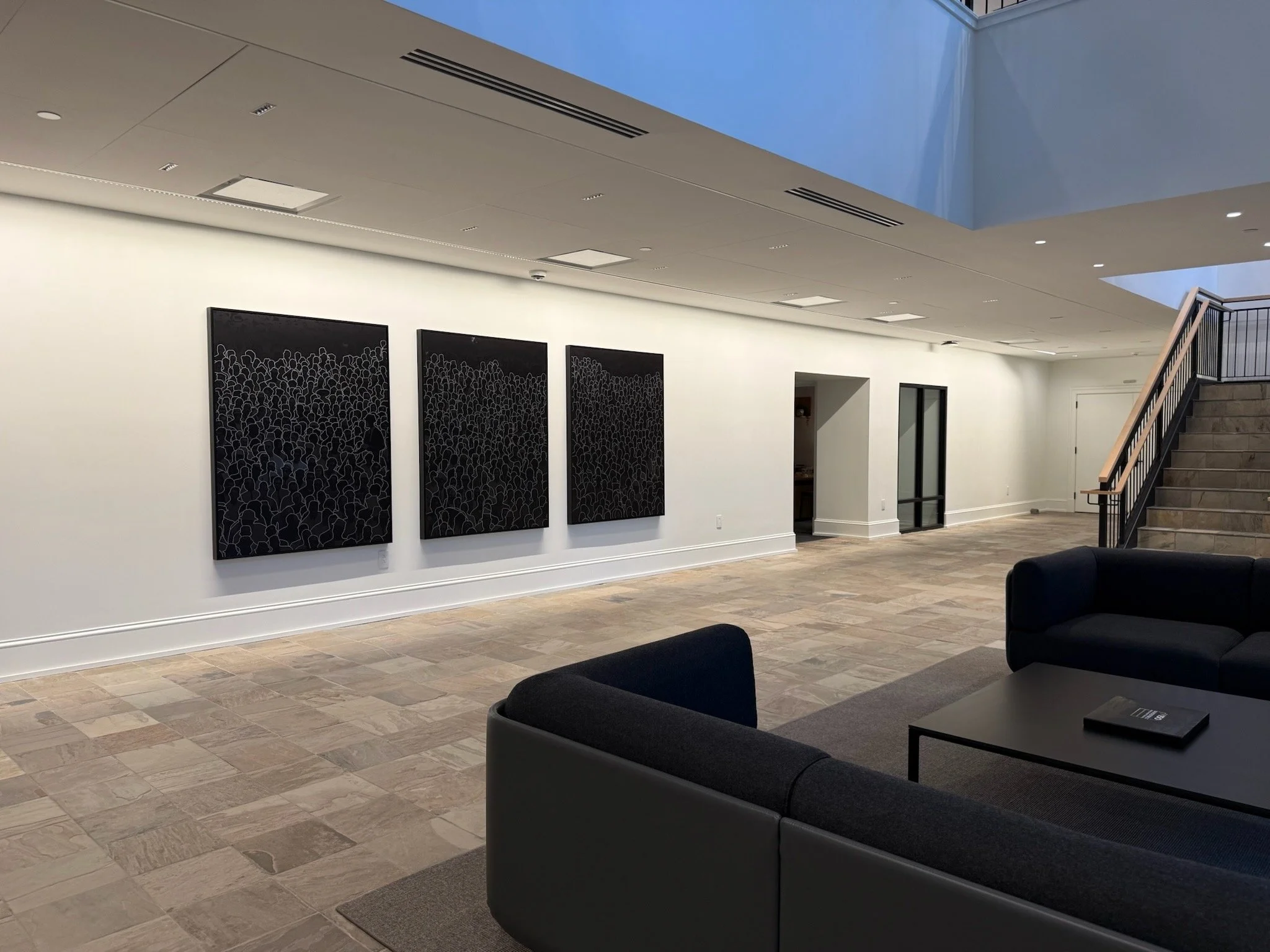
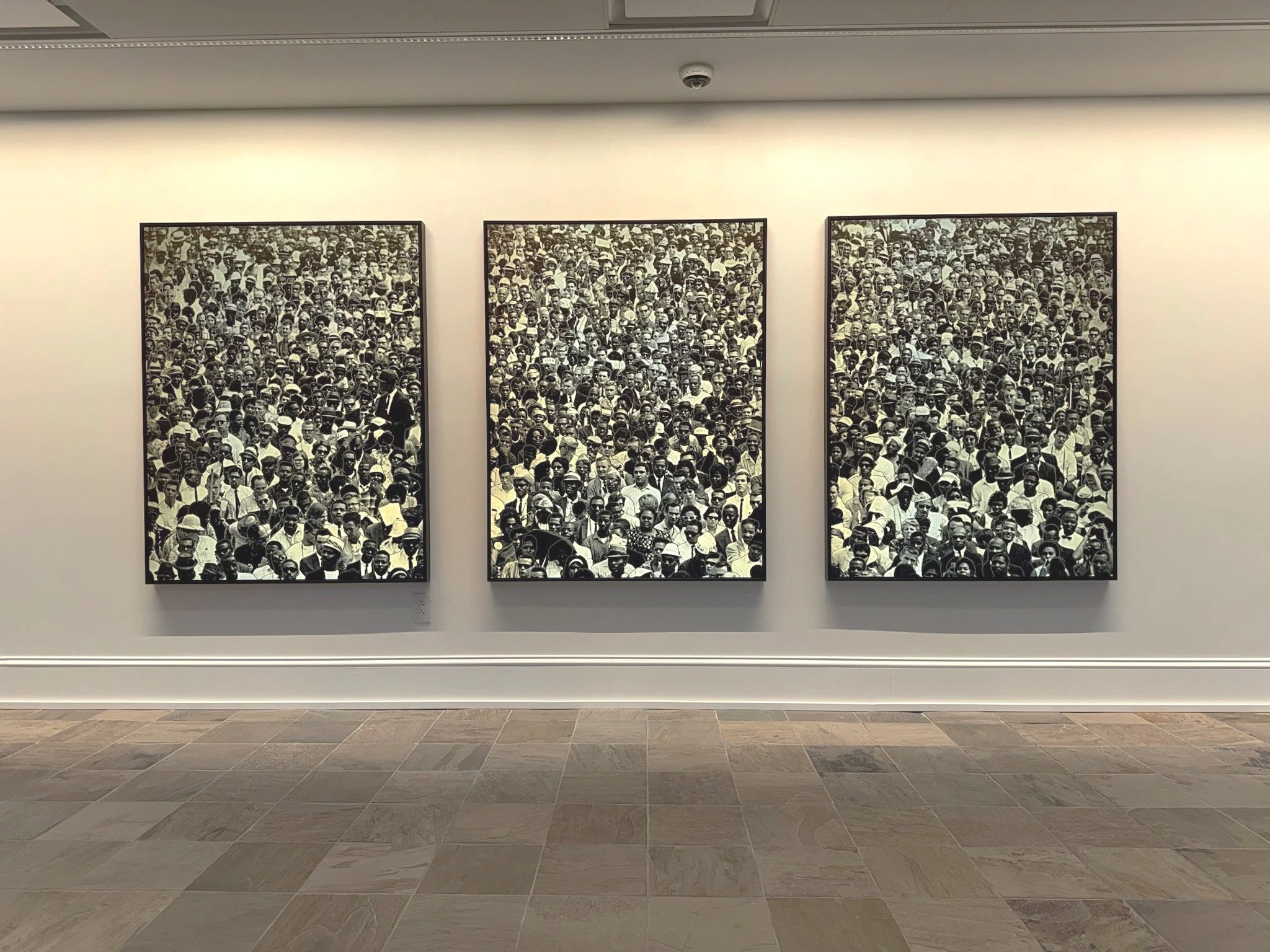
Hank Willis Thomas (American, b. 1976)
Silver Lining, 2026
UV printed retroreflective vinyl and metallic paint marker mounted on Dibond
62 x 48 inches (each panel)
Hank Willis Thomas is a conceptual artist focusing on themes relating to perspective, identity, commodity, media, and popular culture.
Influenced by social history and the hard-fought, perennial battle for equality in all areas of his work, Thomas co-founded For Freedoms with artist Eric Gottesman in 2016 as a platform for creative civic engagement in America. Inspired by American artist Norman Rockwell’s paintings of Franklin D. Roosevelt’s Four Freedoms (1941)—freedom of speech, freedom of worship, freedom from want, and freedom from fear—For Freedoms uses art to encourage and deepen public explorations of freedom in the 21st century.
Hank uses a variety of media, including mirrors and retroreflective vinyl—an industrial material rarely used in the arts—to challenge perspectives in his work, exploring often-overlooked historical narratives. This triptych depicts images of the crowds listening to Martin Luther King Jr’s I Have A Dream speech in 1963. The images are activated by flash photography, playing with role reversal by having the viewer step into the position of image maker. By adding multiple, hidden layers, Thomas also asks the viewer to consider who is included in history and who is erased, revealing the complicated nature of storytelling.
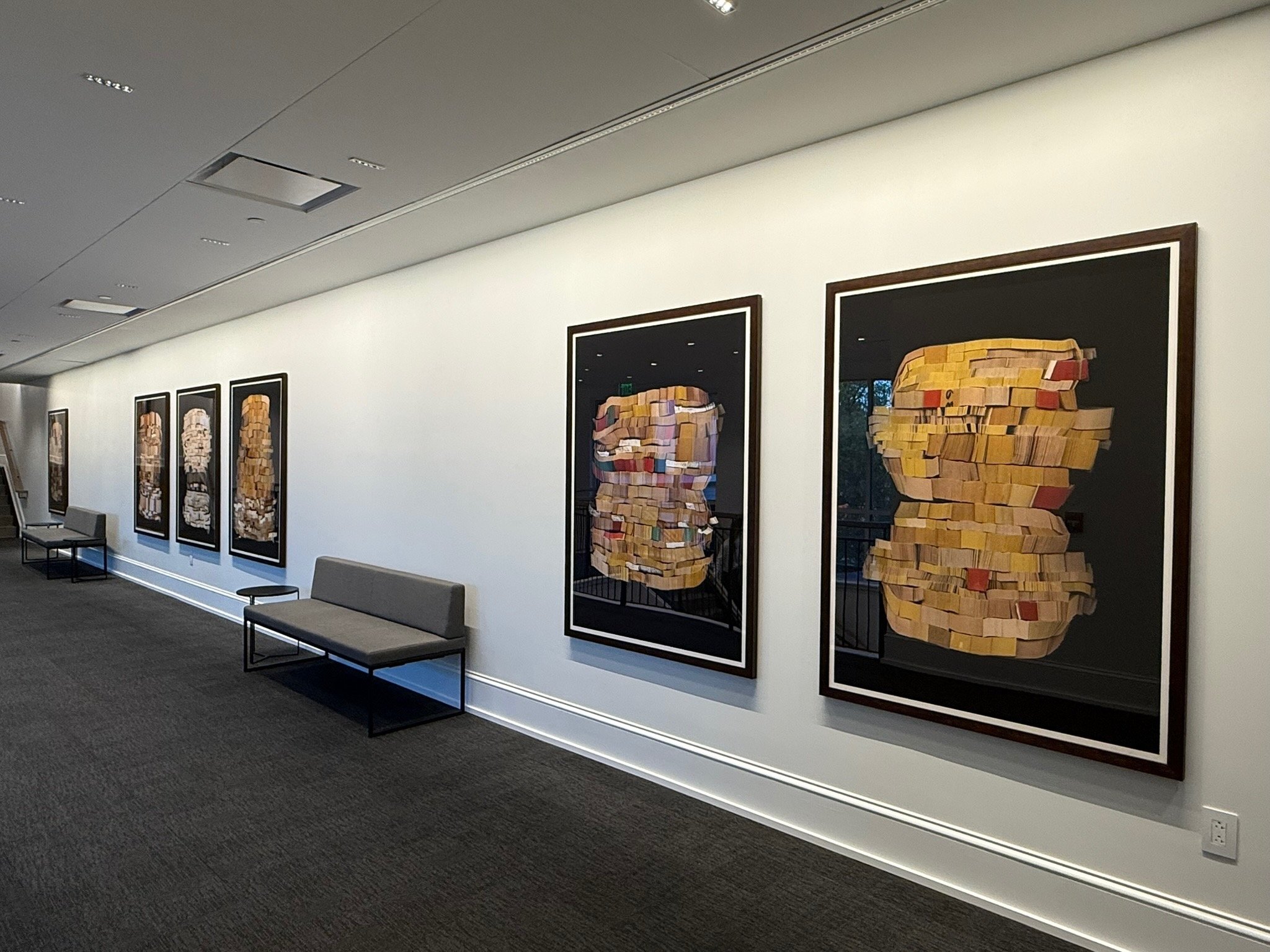
Ann Hamilton (American, b. 1956)
book weight aa-ff (human carriage), 2009/2010
60 x 44 inches (paper size)
Archival inkjet print
Ann Hamilton describes reading as a transformative experience that leaves no physical trace. She questions how this fleeting act can take tangible form. The book weight series developed from a monumental sculptural installation she created for the Guggenheim Museum in New York, made from stacks of books and a wheeled carriage. As the books were prepared for shipment to the museum, Hamilton and her assistants scanned them to record the inventory. During this process, a surprisingly beautiful new body of work emerged.
These large-format photographs are of human-scale proportion and hang in the upstairs atrium outside the gallery of portraits as a clever nod to the importance of experimentation, process, learning, and knowledge.
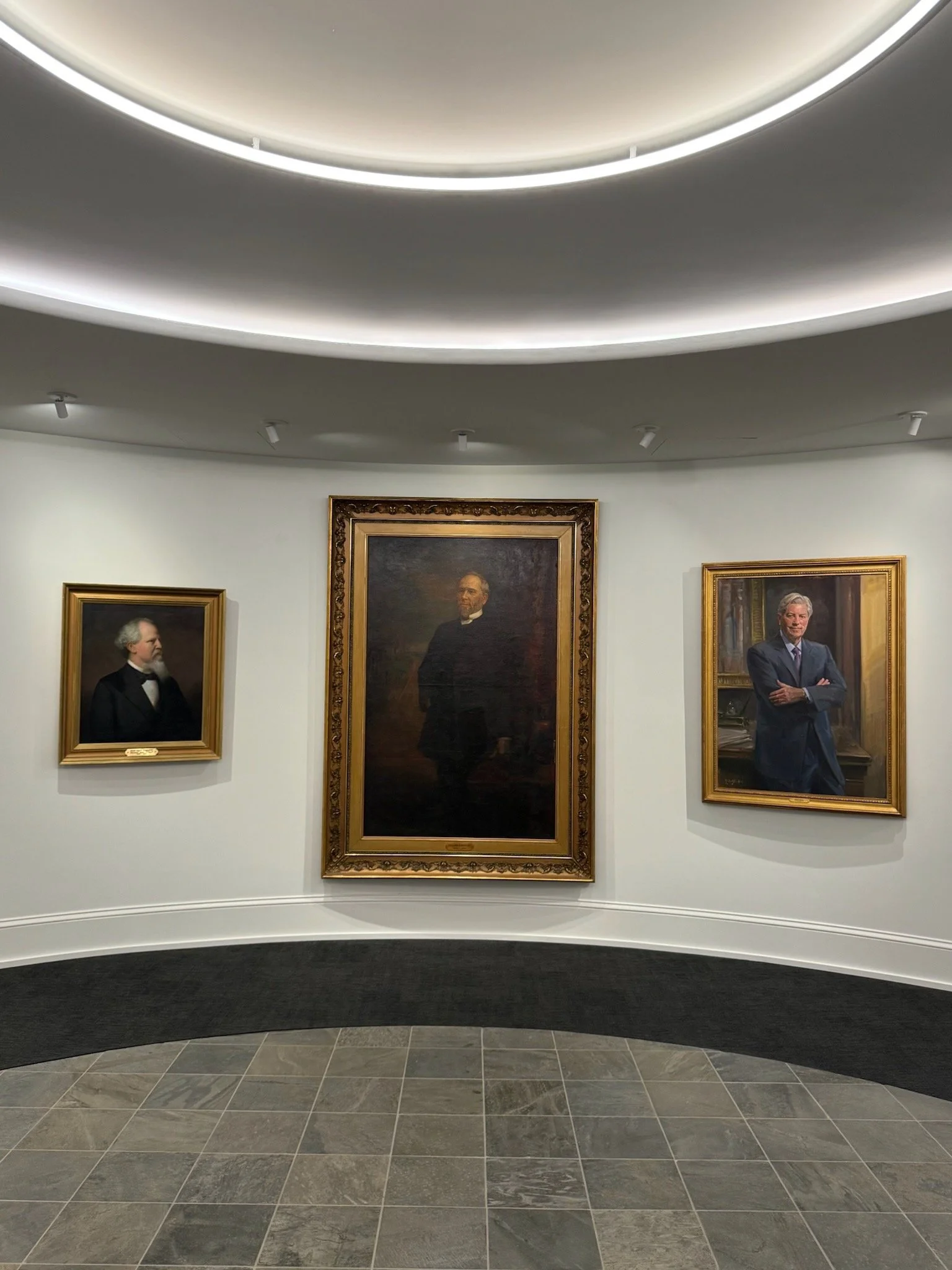
A gallery of historic portraits of past chairs of the board of trust was hung outside the board suite. It honors the legacy and commitment of those individuals who have supported the mission, vision, and values of Vanderbilt University through this service to the university. Portraits are hung in clockwise chronological order, beginning with the immediate past chair, Mark Dalton, LS’75, 2011-2017 (right), and ending with the first board chair, Bishop Holland N. McTyeire, 1873-1889 (middle).
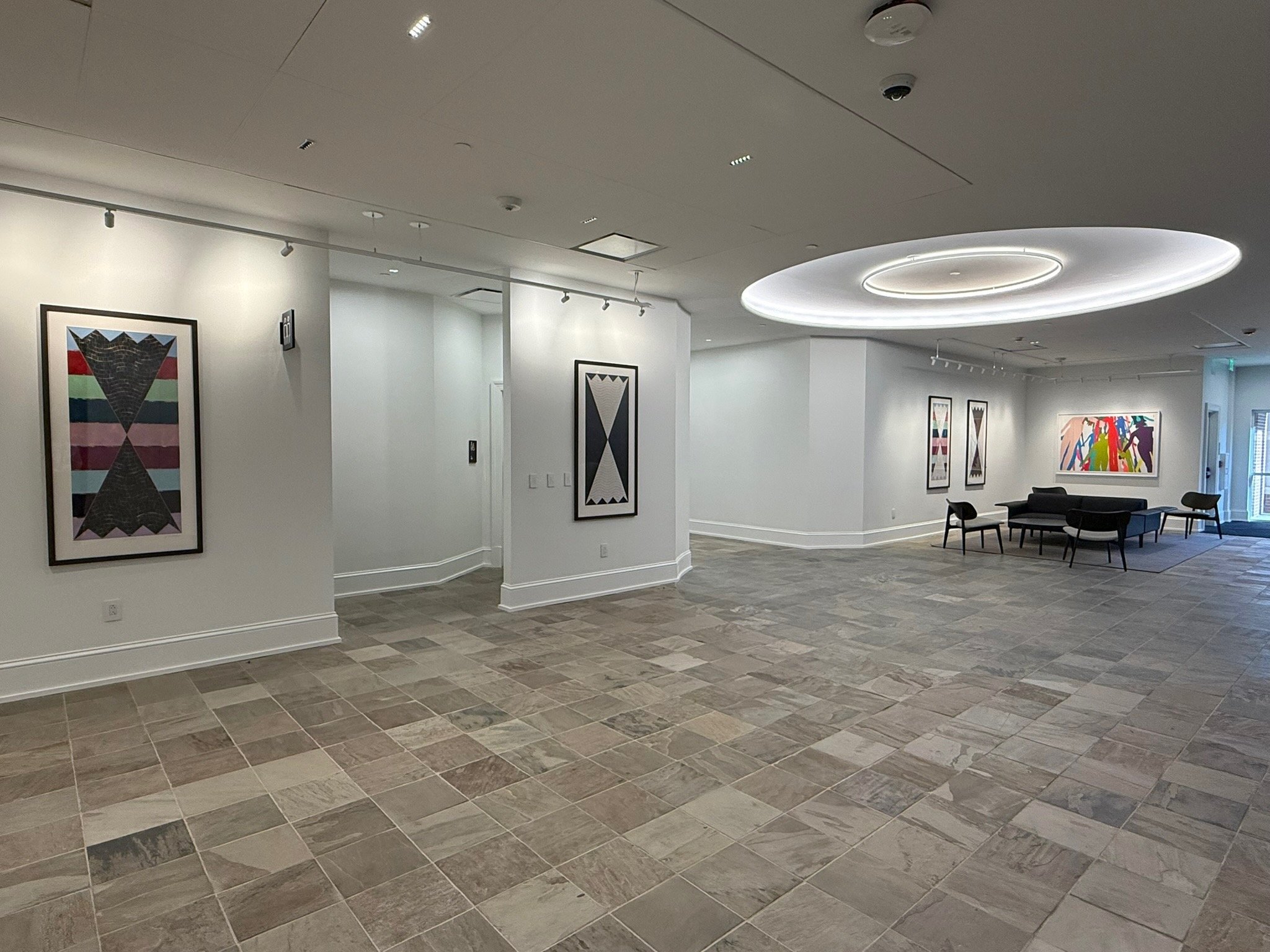
Dyani White Hawk (Sičáŋǧu Lakota American, b. 1976)
They Gifted (Day), They Gifted (Night), 2024
Intersections I-II, 2024
Screenprints on Lanaquarelle
58 x 28.5 inches each
Edition of 24
As an artist of Lakota, German, and Welsh heritage who grew up within both Native and urban American communities, Dyani White Hawk draws from personal experiences, as well as the history of both Lakota abstraction and Euro-American abstraction, to create works that ask us to think critically about how the mainstream retelling of histories has excluded vast segments of our population. Rooted in intergenerational knowledge, White Hawk’s art centers on connection—between one another, past and present, earth and sky.
Jonathan Borofsky (American, b. 1942)
Human Structures #3, 2005
48 color screenprint
42.5 x 60 inches
Edition of 35
Known internationally for his monumental figural artworks, Jonathan Borofsky uses sculpture, drawings, and installations to explore what it means to be a person, often using stylized descriptions of male and female figures to suggest the commonalities shared across humanity. In a period dominated by the detached ethos of Minimalism, Conceptualism, and Pop Art, the artist developed a highly personal style that emphasized the emotive and fantastical recesses of consciousness.
Ai Weiwei (Chinese, b. 1957)
Grass Mudd Horse, 2024
2-color and varnish lithograph printed with Voirin lithographic press, hand cut. BFK Rives 300 g paper
Edition of 99
23 × 23 inches
A global citizen, artist, and thinker, Ai Weiwei moves seamlessly between modes of creation and inquiry. His work spans architecture, public art, and performance. He addresses complex issues related to economics, politics, nature, and social forces while blending craftsmanship with conceptual innovation. Universal symbols of humanity and community, such as bicycles, flowers, and trees—as well as timeless problems of borders and conflicts—are given new significance through installations, sculptures, films, and photographs. Ai also continues to speak openly on issues he considers important. He is a leading cultural figure of his generation and exemplifies free expression both in China and around the world.