Art Strategies has been working with Vanderbilt University on an art plan for landmark sites on its campus. Each project integrates historic assets, art from Vanderbilt’s existing collection, and newly commissioned, contemporary artworks into the buildings.
Our first art program was developed for the iconic Kirkland Hall, which recently reopened after a significant renovation by MAS Studio, and SOM.
MAS Studio describes the interior renovation of the 50,000 square foot building as ‘reflecting a careful balance between preservation and revitalization’. The art was curated into the building with this thoughtful approach in mind.
Architect of record | Centric Architecture.
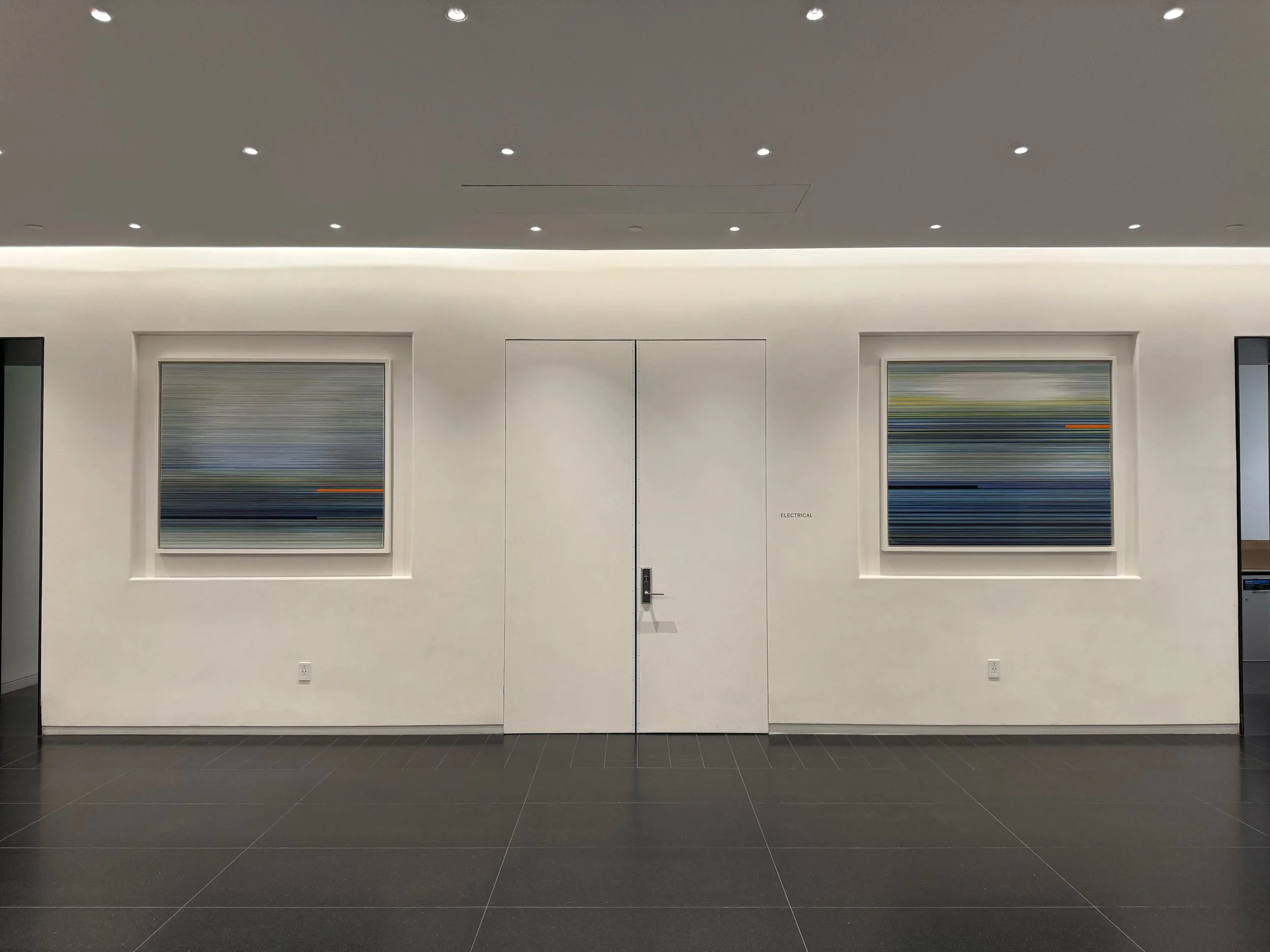
Miya Ando (American, b. 1973)
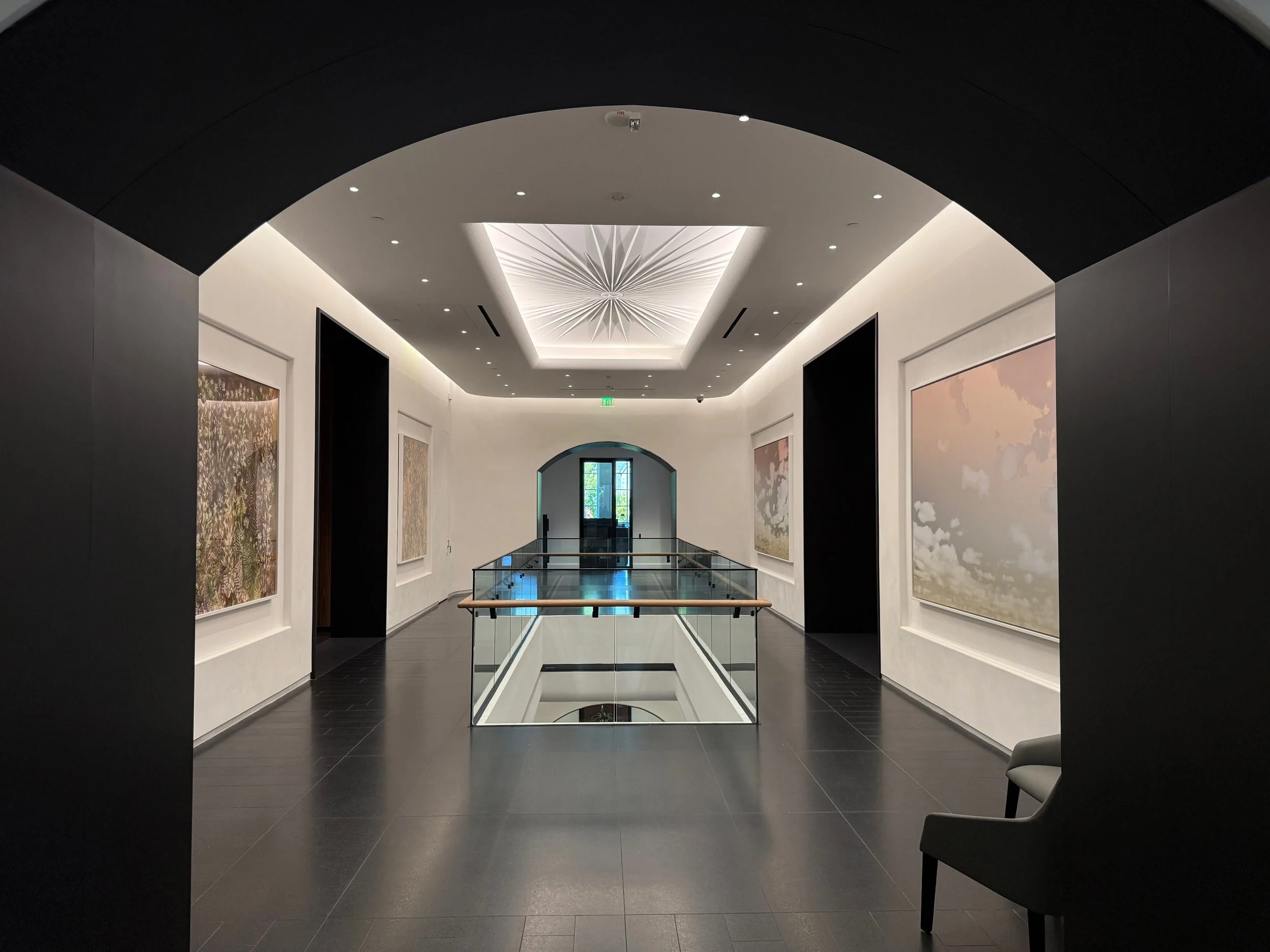
Twilight (Dusk) and Twilight (Dawn), 2025
Ink on aluminum composite
74.5 x 122 inches each
Art Strategies commissioned several artists to create works for large niches in the gallery walls on each level of the building. Miya Ando visited campus and documented the sunset from the rooftop of Kirkland Hall, taking that inspiration back to her studio to make these artworks of the place and of a time.
Miya Ando’s cloud series captures the core aspects of her artistic approach: exploring materials, referencing cultural and historical themes, showing respect for nature, and aiming to create a visceral experience for viewers. Having grown up between two very different environments—a Buddhist temple in Japan and the redwood forests of Northern California—Ando sees the cyclical nature of clouds as a symbol of impermanence and interdependence.
Charles Gaines (American, b. 1943)
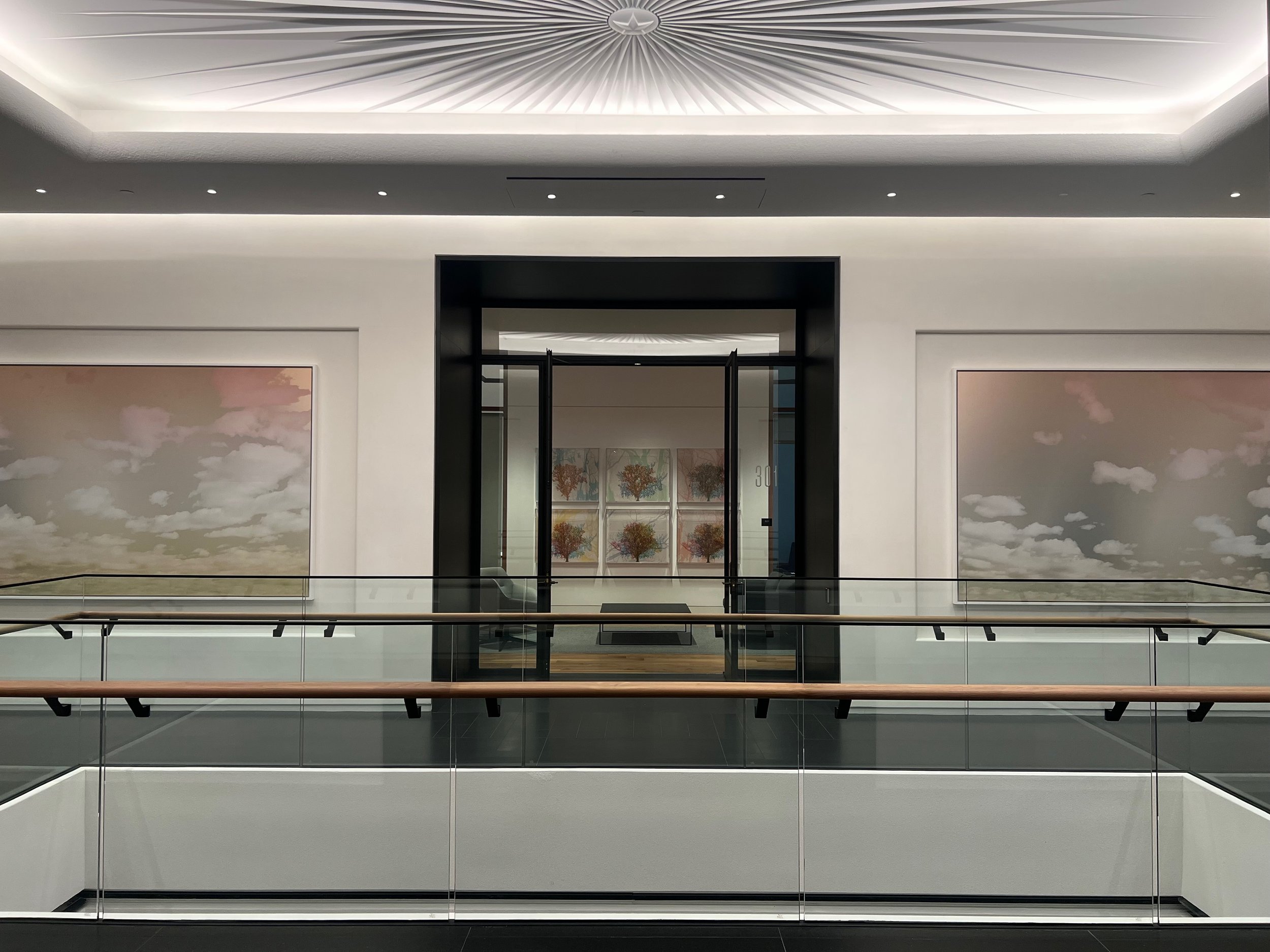
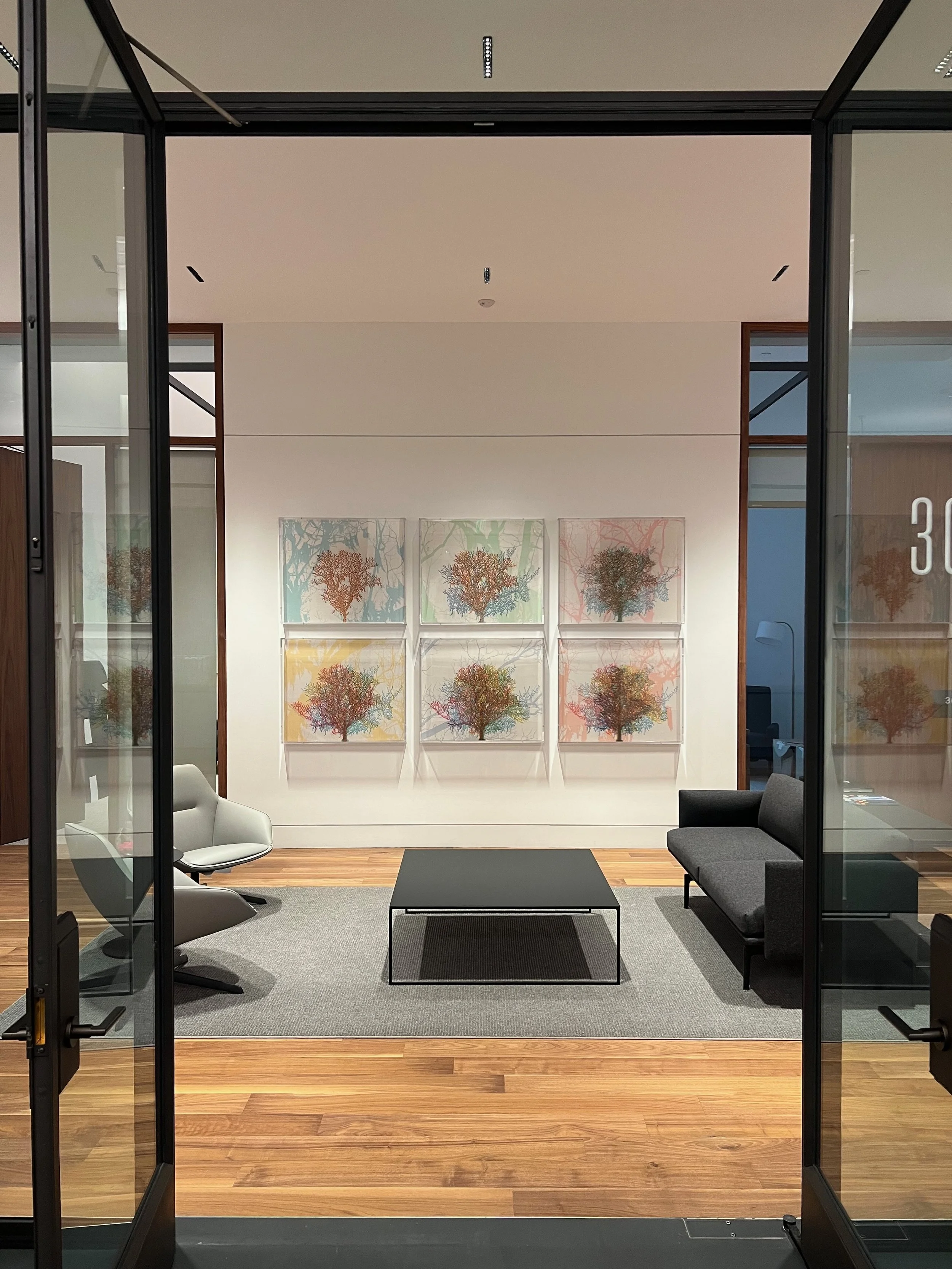
Numbers and Trees: Charleston Series 2, 2024
Color aquatint and spit bite aquatint, chine collé and UV acrylic with printed acrylic box
Edition of 35
30 1/2 x 36 x 3 1/2 inches each
Charles Gaines is an influential conceptual artist and educator known for his rigorous, system-based work that explores the relationship between perception, meaning and the construction of identity. He uses strict, rule-based systems, predominantly the grid, to create drawings, photographs, installations and musical compositions. For example, in this Numbers and Trees series, he plots the form of a tree onto a numbered grid.
Sam Falls (American, b. 1984)
One and Also Two and Always the Seer is a Sayer, 2025
Pigment on canvas
72.5 x 81 inches | 72.5 × 74.5
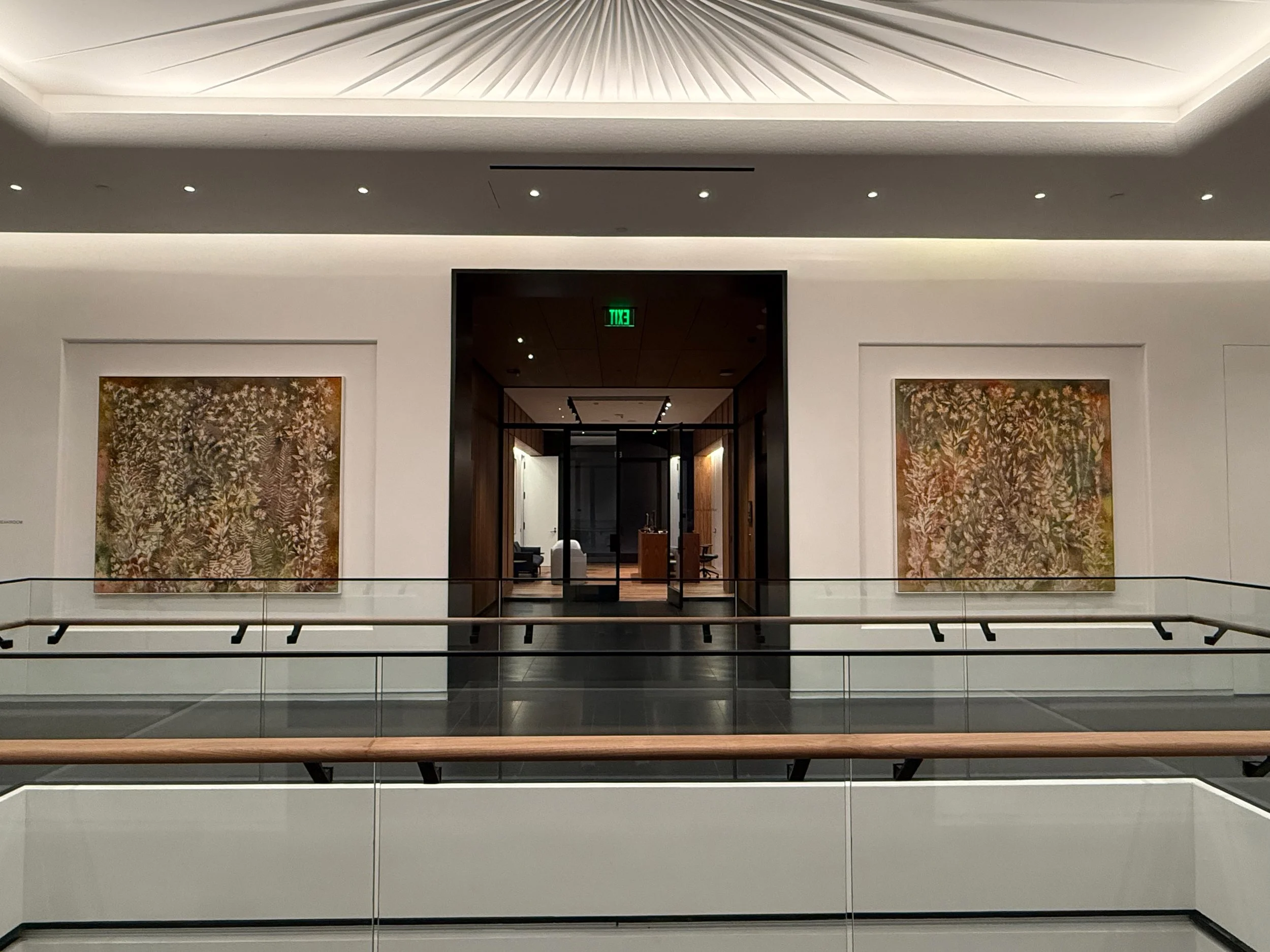
Sam Falls draws inspiration from nature and works directly with its elements. Using processes that capture the imprints of plants using various atmospheric conditions—from sunlight to heavy rain, mountain winds and morning dew—Falls creates abstract paintings, prints and ceramics that highlight plant life and memories of place.
These paintings were created beneath the Ginkgo tree outside Kirkland Hall using the natural humidity of Nashville and pigment over flora and foliage collected on campus. The title One and Also Two refers to the last line of Goethe’s Ginkgo poem which explores the concept of duality and unity by using the leaf’s form as a metaphor for the relationship between two people. The title of the adjacent painting, Always the Seer is a Sayer, is taken from a Ralph Waldo Emerson lecture about creativity.
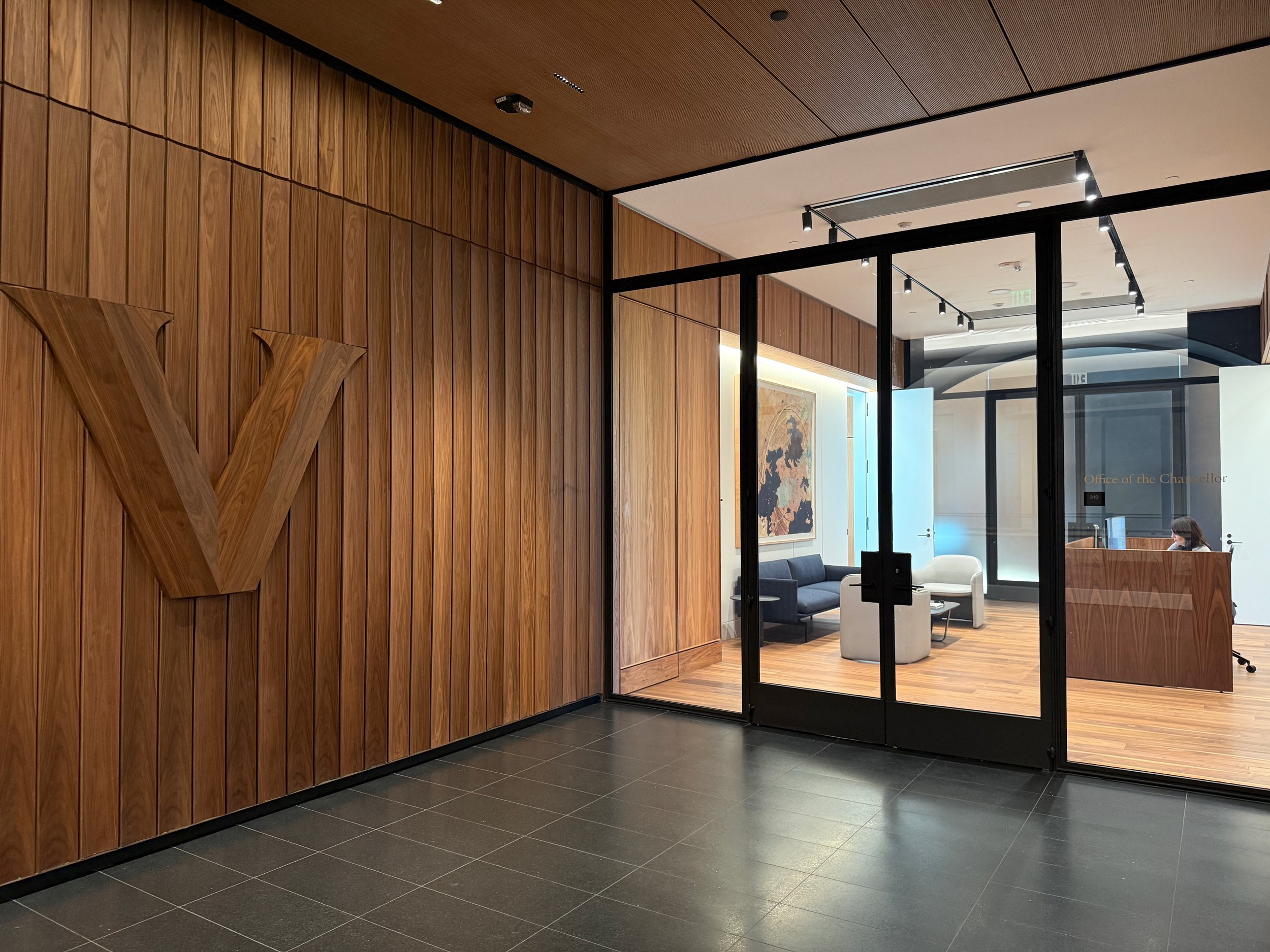
SOM seemlessly integrated branding into the interior architecture of the building. The artworks add a final layer to the storytelling of the design process.
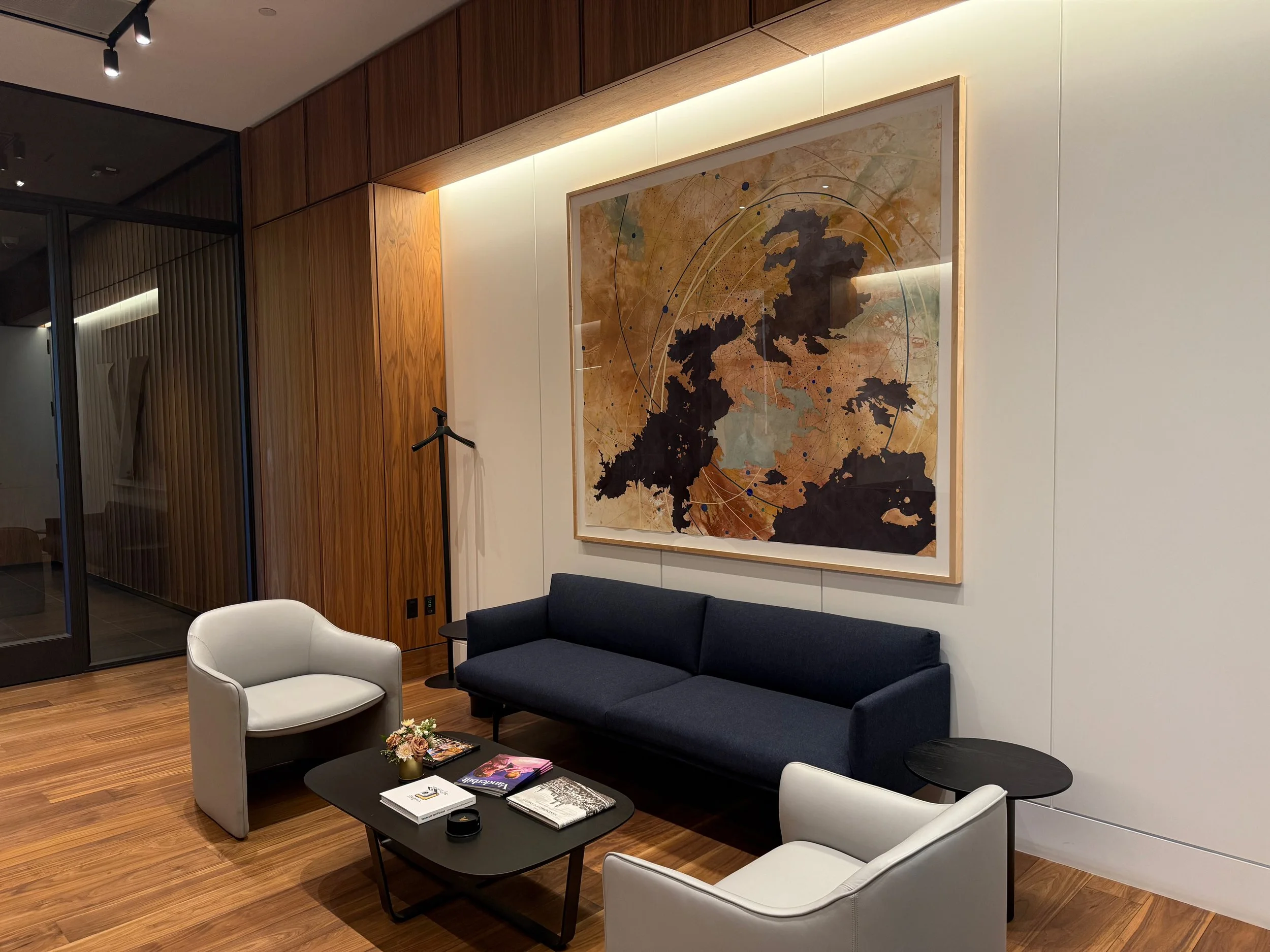
Val Britton (American, b. 1977)
Golden Hour, 2025
Acrylic, ink, collage, monoprint, colored pencil, and cut-out paper
66 x 79 1/4 inches
Val Britton creates immersive, collaged works on paper and site-specific installations that explore physical and psychological spaces. Her fragmented landscapes draw on the language of maps to examine memory, history and the potential of abstraction.
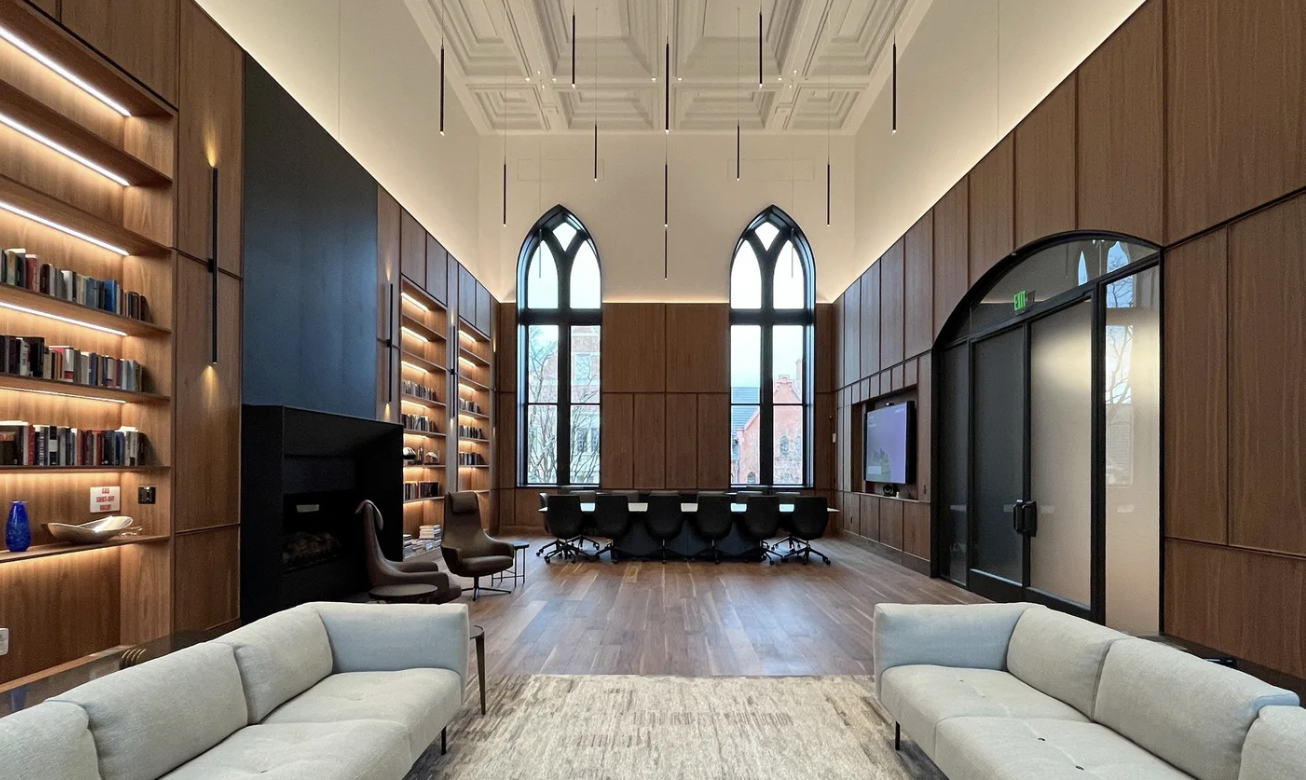
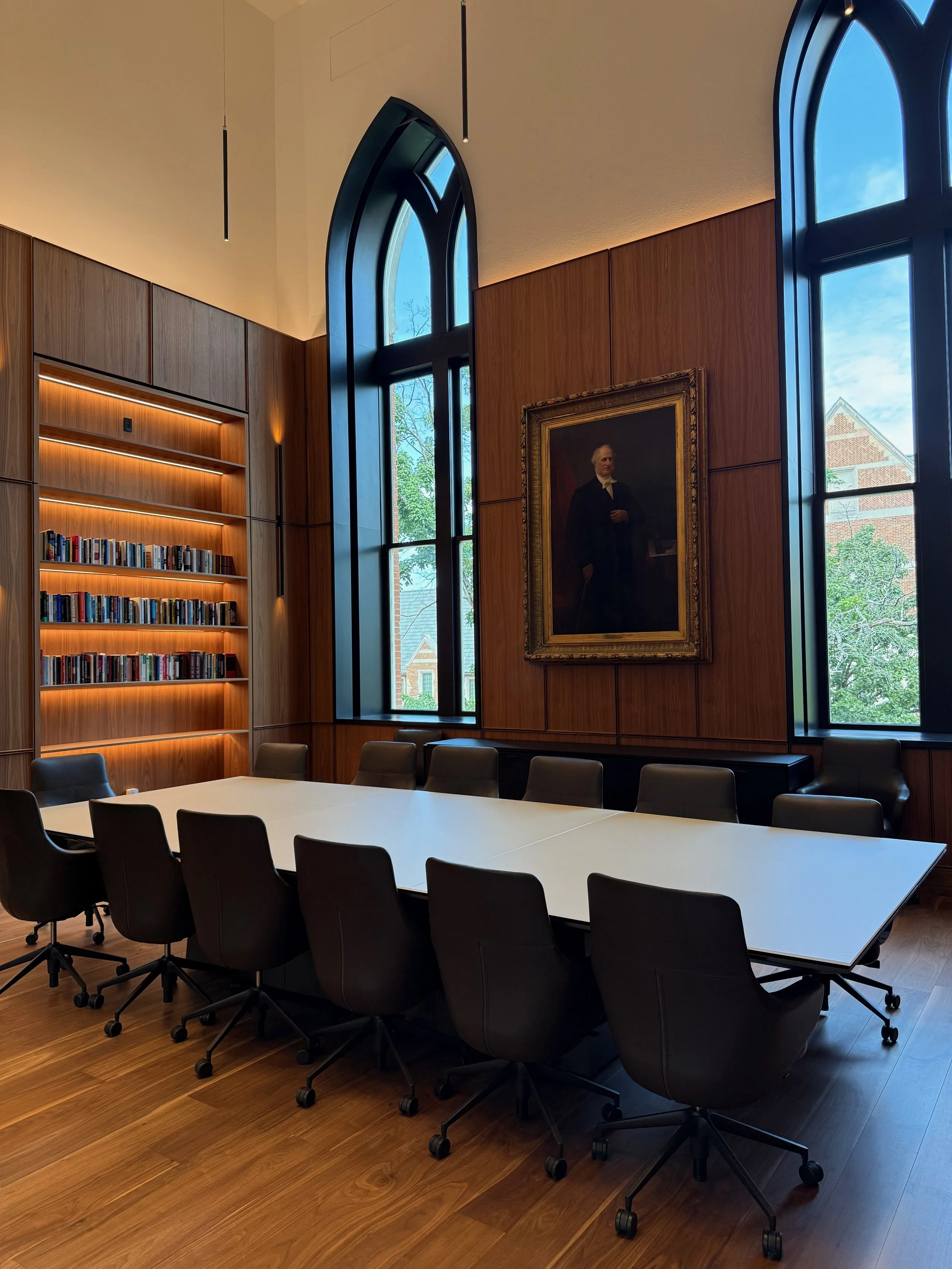
Major architectural components of the historic building were meticulously restored, updated, and celebrated, maintaining the integrity of the original structure while enhancing its performance.
Photograph by MAS Studio
Jared Bradley Flagg (American, 1820–1899)
Portrait of Cornelius Vanderbilt (1794–1877)
Oil on canvas
Cornelius Vanderbilt, known as “the Commodore,” was in his 79th year when he made the gift that founded Vanderbilt University in 1873. The gift was his only major philanthropy and was given to create a university in the South that would “contribute to strengthening the ties which should exist between all sections of our common country.”
Jared Bradley Flagg was a noted portraitist and Episcopalian minister. Flagg painted several portraits of the Commodore, including one that hangs in Grand Central Terminal in New York.
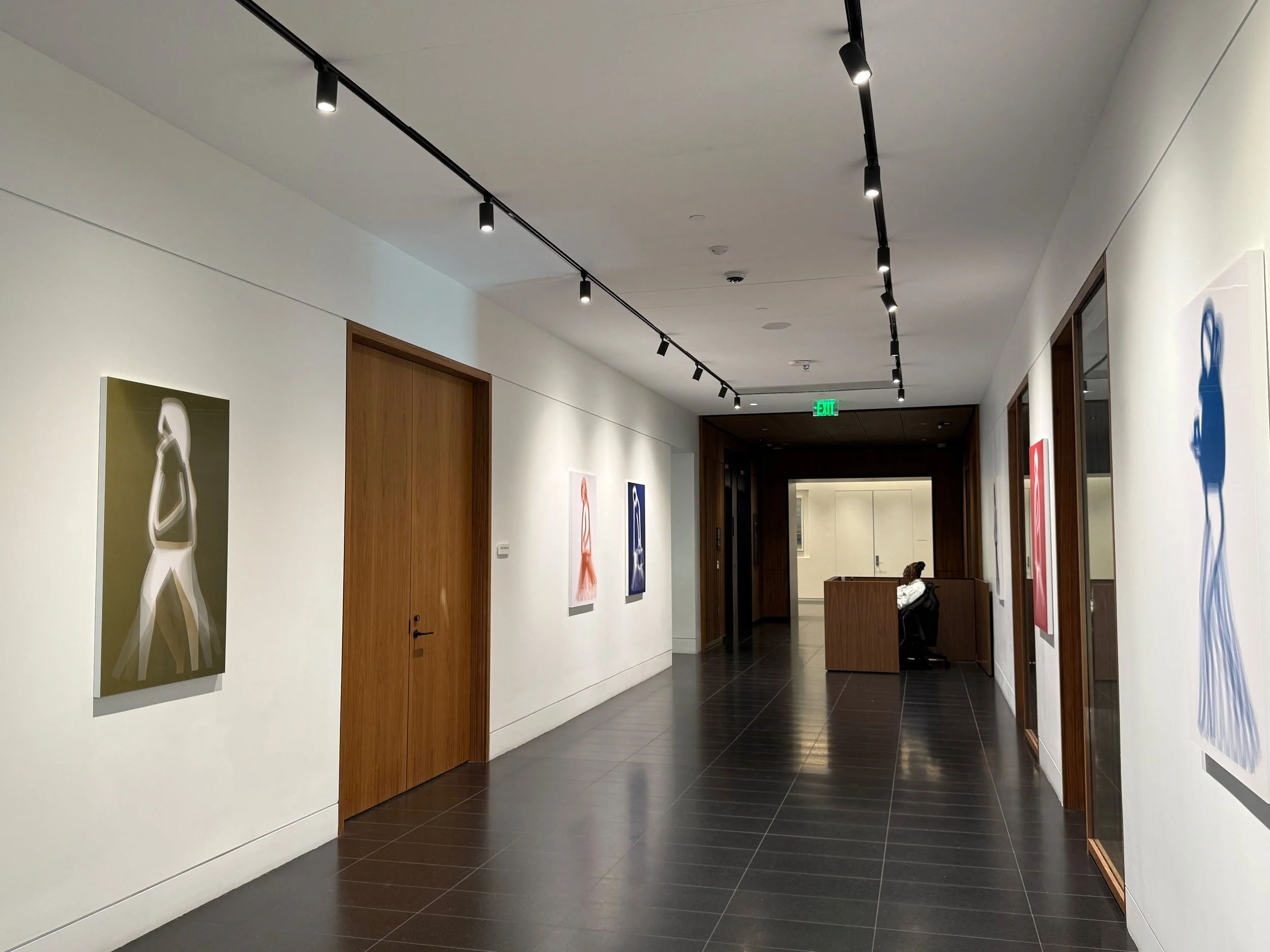
Julian Opie (British, b. 1958)
Old Street Walkers: Coffee, Curly Hair, Turn Ups, Leather Bag, Long Hair, and Fur Jacket, 2022
Series of six lenticular acrylic panels, each mounted onto white acrylic
Edition of 50
Julian Opie pushes the boundaries between what is considered traditional and contemporary art. His distinctive visual language is instantly recognizable and reflects his preoccupation with the idea of representation and how images are perceived and understood.
Opie uses digital technology and other contemporary materials to explore and update historical traditions. His process begins by taking pictures of his subjects. Here, he has documented a cross-section of humanity while walking the streets of London.
Anne Lindberg (American, b. 1962)
reveal, 2023 and unveil, 2025
Graphite and colored pencil on mat board
Anne Lindberg draws inspiration from textiles and the neurological and physiological networks of the human body. Her seemingly simple works—consisting of graphite and colored pencil drawings on mat board or over photographs, thread drawings, and thread-based sculptures and installations—are created through a meticulous, labor-intensive process. Each line is hand-drawn, and every thread is carefully stretched into compositions that appear to ripple and shimmer, shifting and moving as the viewer changes position.
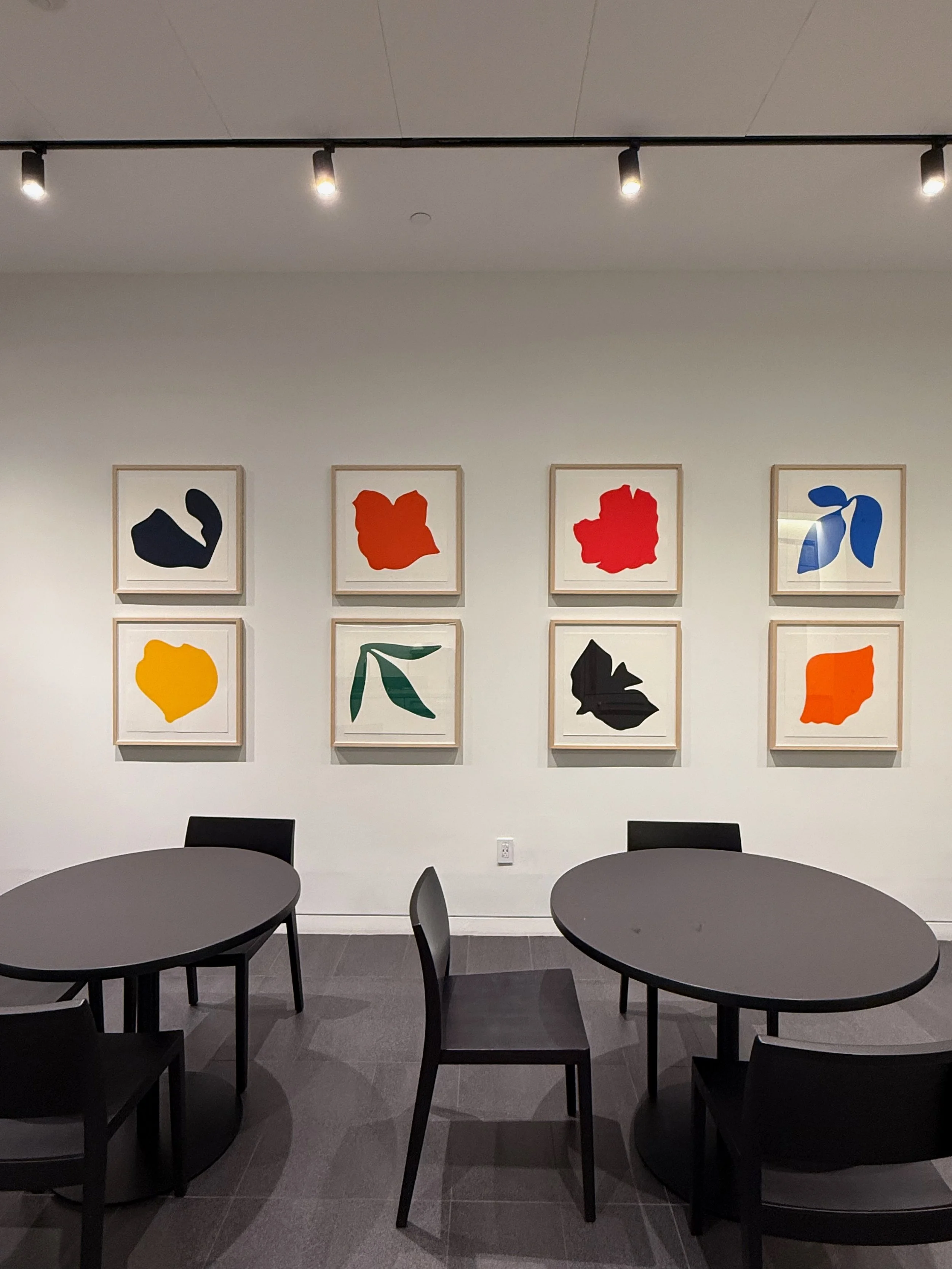
Paul Kremer (American, b. 1971)
Two Sets, 2024
Set of 8 hand-pulled screenprints on Coventry Rag Smooth 335 gsm
Edition of 25
Paul Kremer is celebrated for his distinctly organic minimalist abstractions. He uses fluid acrylics on raw canvas to create formal compositions that are softened by the texture of their absorbent surface. The subject matter is inspired by, and suggests, a real-life allusion.
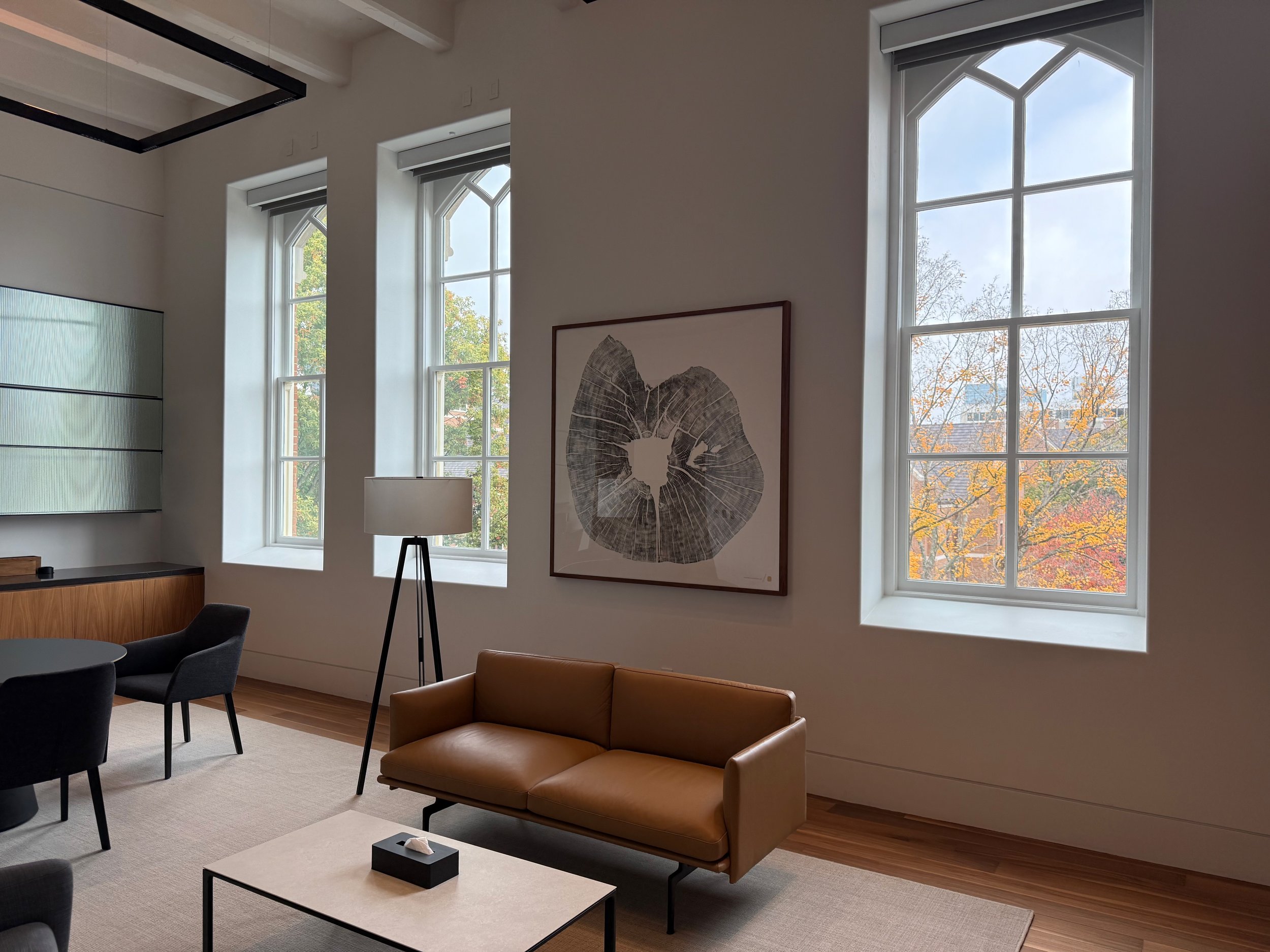
Marko Barakoski (Canadian, b. 1983)
Vanderbilt Bicentennial Oak, 2024
End-grain relief print
Vanderbilt’s Bicentennial Oak predated the university that grew around it. When the tree fell in 2022, its age was estimated to be around 250 years old. Its history is honored in the end-grain relief print crafted by artist and woodworker Marko Barakoski with assistance from Vanderbilt students and faculty. The prints were created on campus with wood salvaged from the fallen tree.
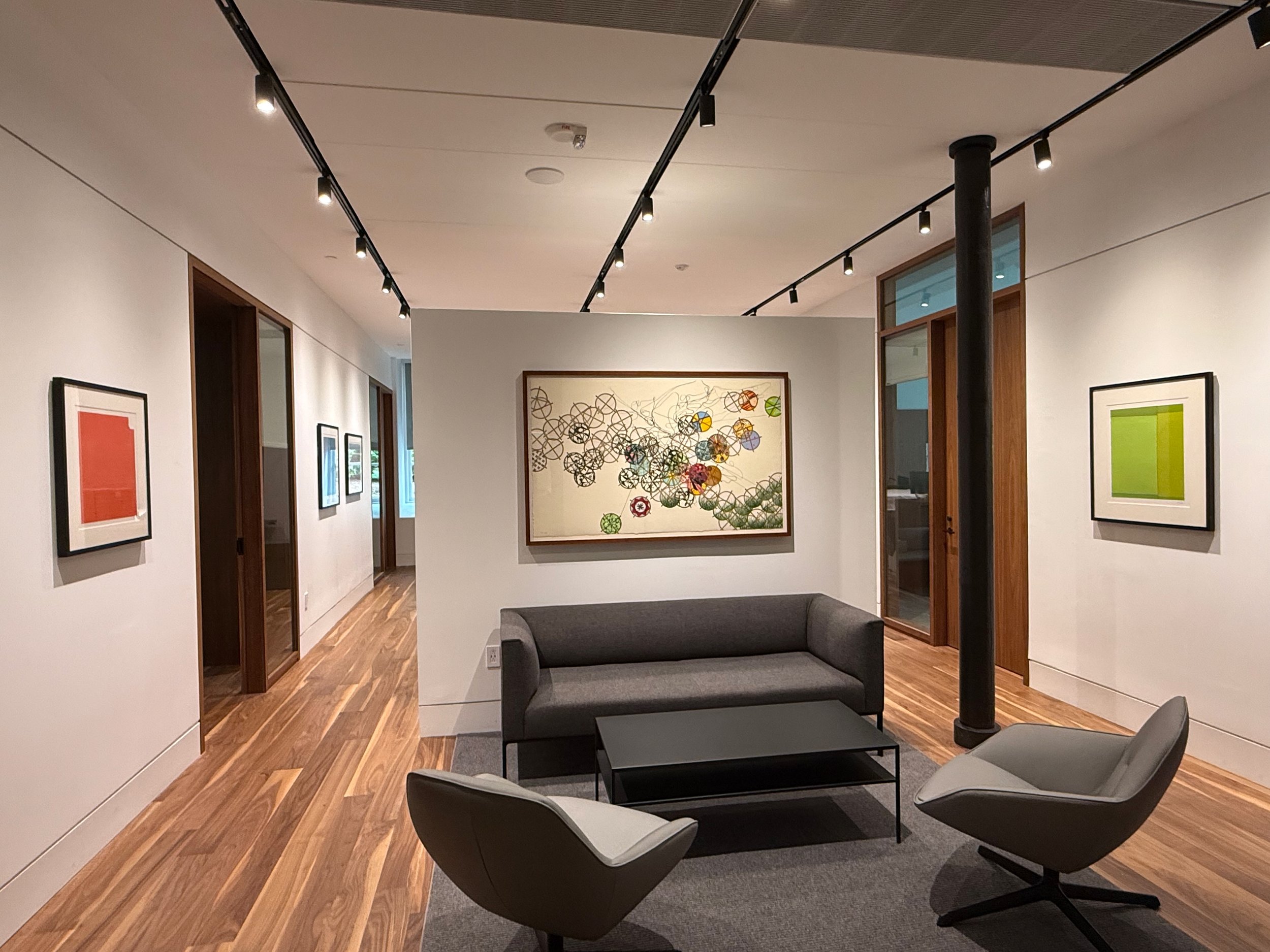
Jacob Hashimoto (American, b. 1973)
Oft Misremembered birthrights, Pasts, and Pretty Stories of Dissatisfied Lives and Mischief, 2018
Woodblock print
Edition of 37
Jacob Hashimoto creates artworks and architectural installations that blend historical art and cultural references with technological elements including video games and virtual environments.
His work is surrounded by prints from the Vanderbilt collection by Kim Lin, Bridget Riley, and Ludwig Sanders.
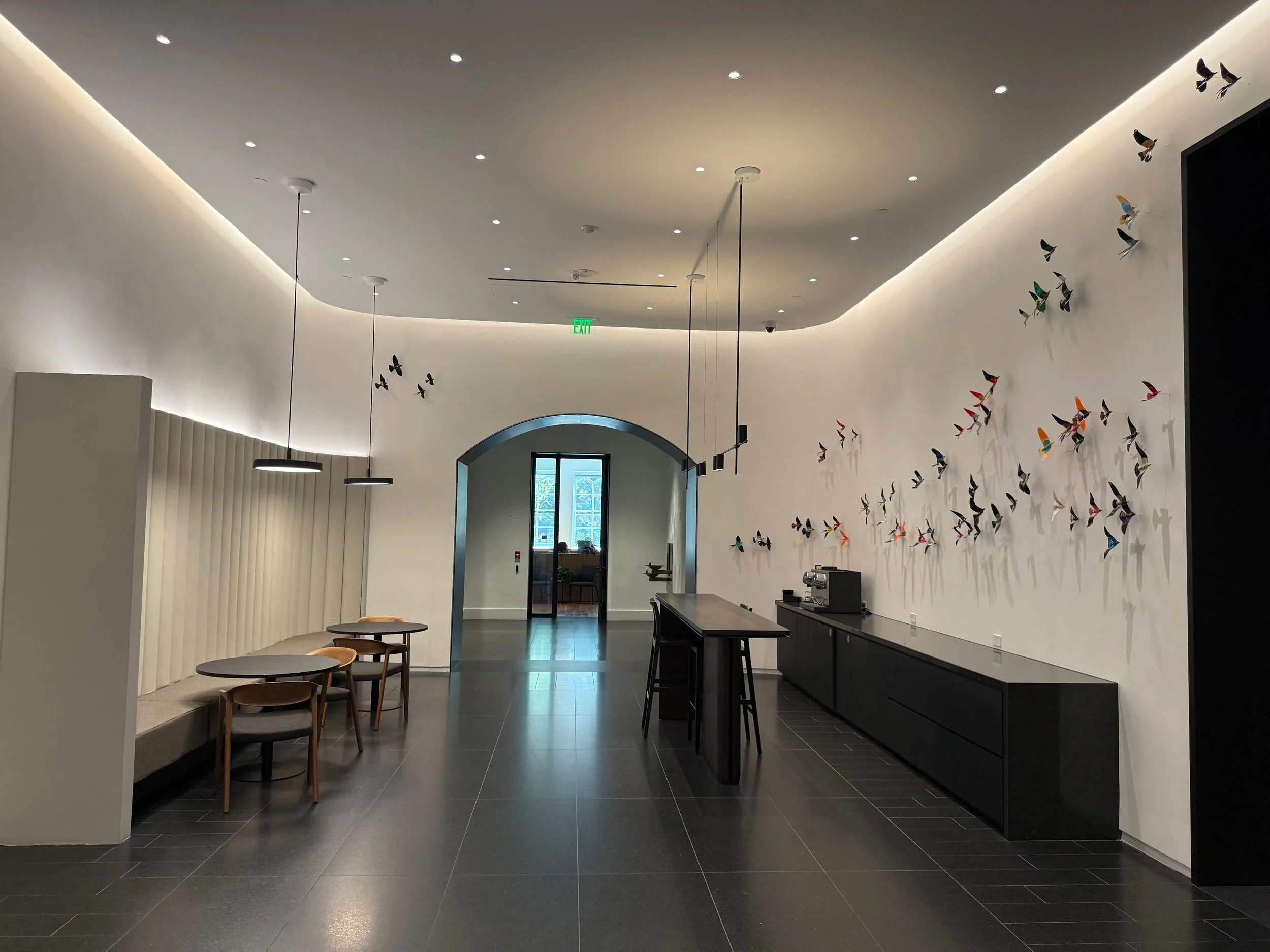
Paul Villinski (American, b. 1960)
Conversation, 2025
Vinyl LP records
Site-specific installation created for Vanderbilt University
Paul Villinski creates studio and large-scale artworks. A pilot of sailplanes, paragliders and single-engine airplanes, he often uses metaphors of flight and soaring in his work. Reflecting his lifelong concern for environmental issues, his art often reuses discarded materials, creating surprising and poetic transformations. This installation for Kirkland Hall features various types of birds crafted from thrifted LPs of musicians connected to Vanderbilt and to Nashville.
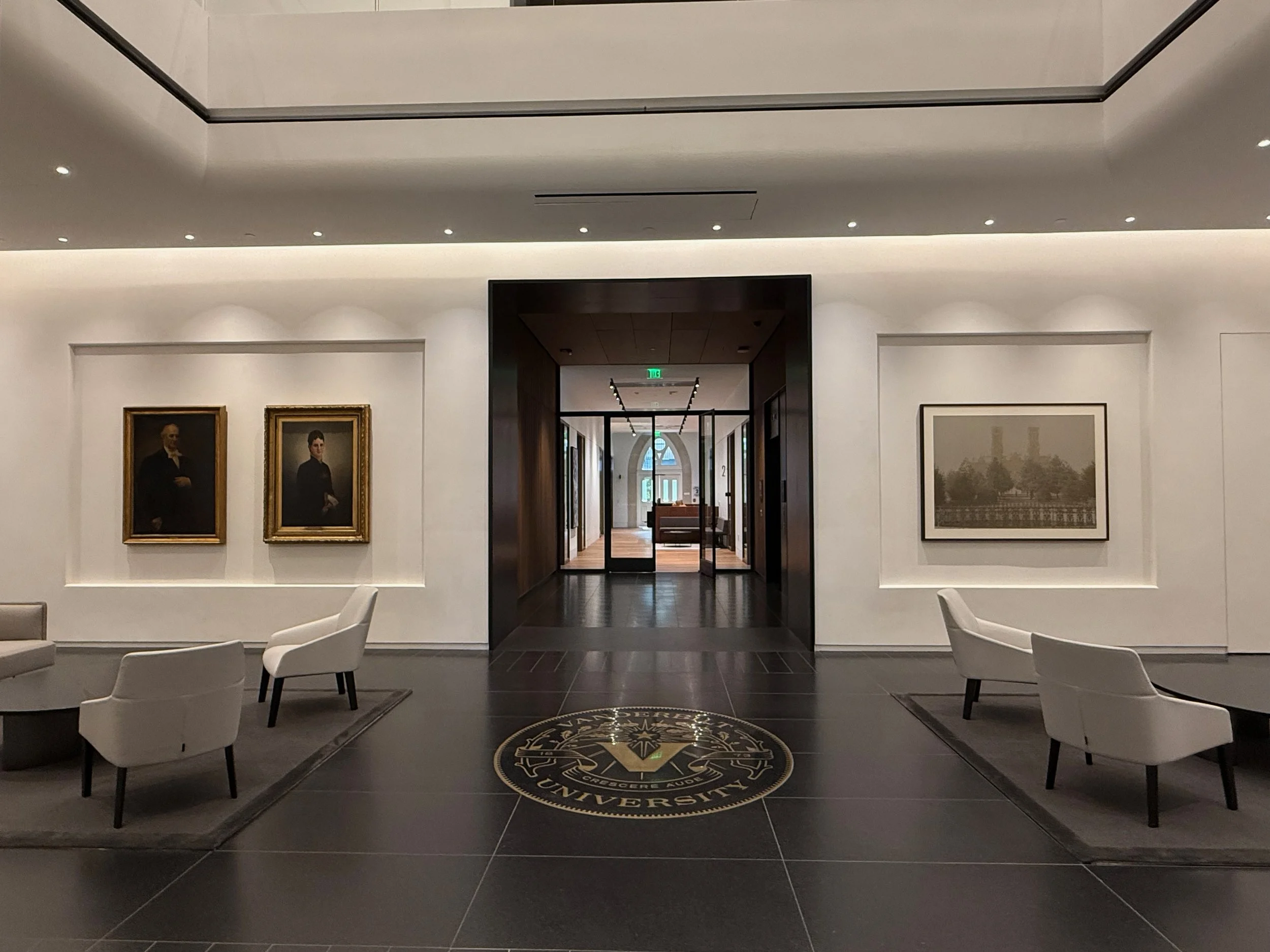
The main entrance to the building grounds us in the history of the university with portraits of Cornelius Vanderbilt and his wife Frank Armstrong Crawford Vanderbilt alongside a historic photograph of Kirkland Hall (1897) from the university archive.
Frank married Cornelius Vanderbilt in 1869. She was strongly devoted to the Methodist Church, and her letters suggest that she played a crucial role in persuading Cornelius to donate the money for a Southern Methodist institution in Nashville. In 1873, that institution was founded as Vanderbilt University, intended to help heal post–Civil War divisions. Crawford House, a residential college on The Martha Rivers Ingram Commons at Vanderbilt, was named to honor Frank’s legacy.
At its beginning, Vanderbilt University consisted of one main building (a teaching structure), an astronomical observatory and houses for professors. The main building burned down in 1905 and was rebuilt by James H. Kirkland, the longest-serving chancellor in university history (1893–1937), in whose honor the building was renamed Kirkland Hall.
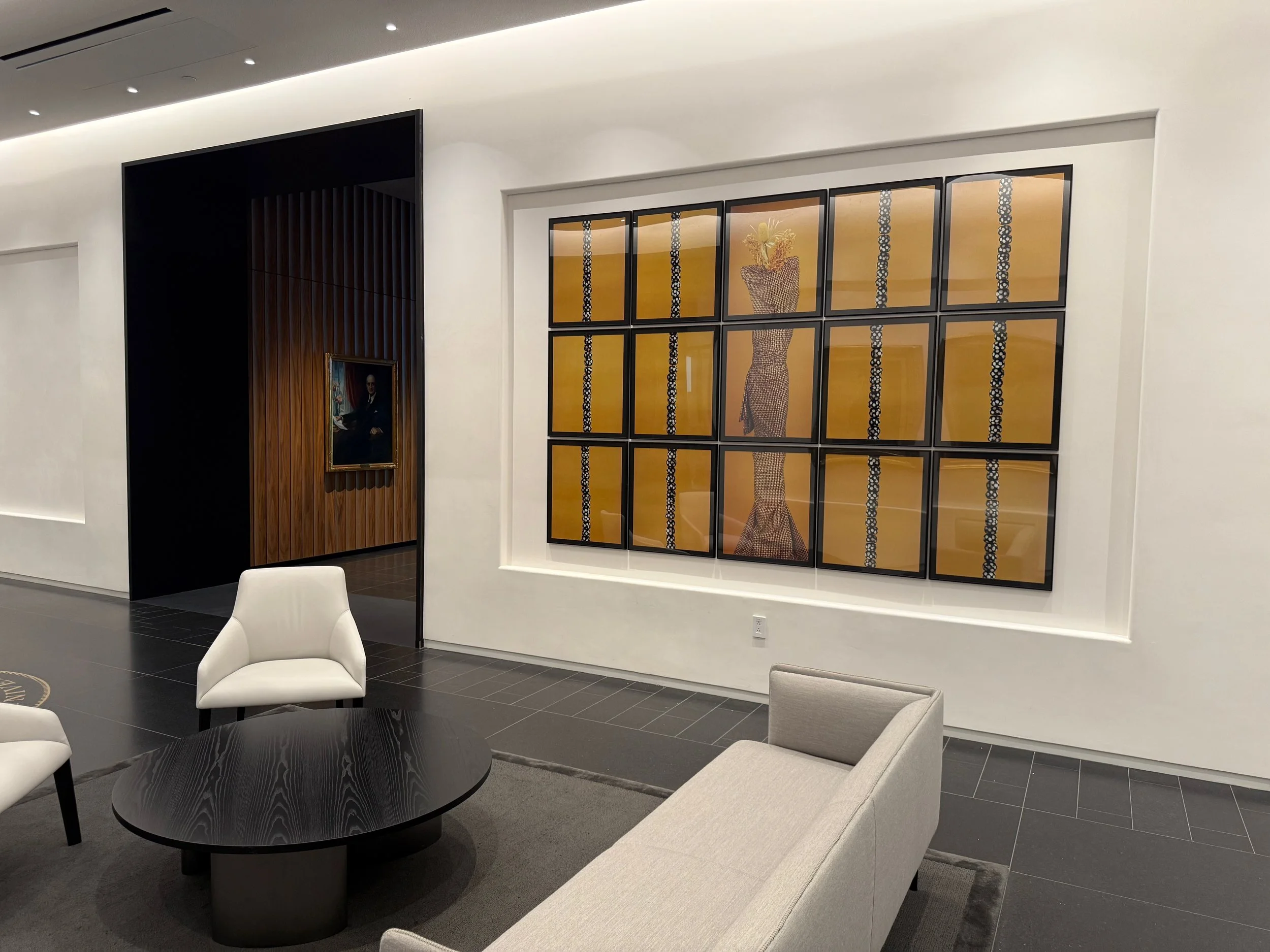
María Magdalena Campos-Pons (Cuban, b. 1959)
Classic Creole, 2003
Composition of 15 Polaroid Polacolor Pro prints
Directly across from portraits of the Vanderbilts is a seminal work of contemporary portraiture by María Magdalena Campos-Pons who holds the position as the Cornelius Vanderbilt Chair of Fine Arts.
Campos-Pons works in photography, performance, painting, sculpture and film to examine how history, memory, gender and religion shape identity. She was born in Cuba and raised on a sugar plantation in a family with Nigerian, Hispanic and Chinese origins. Her work is often autobiographical and seeks to claim space for women’s issues, collecting and sharing stories of forgotten people to foster dialogue and offer a poetic, compassionate perspective on our times.
Among the artist’s most recognizable projects are grids of large-format Polaroid photographs that creatively combine photography and performance. Classic Creole brings together cultural symbols from Europe, Africa and the Caribbean to underscore the global phenomena of cultural blending and hybridity. The work depicts the artist wrapped entirely in fabric she sourced from France, adorned with African orchids.